



Consistent runners ask more from their equipment than occasional exercisers. Clothing is washed repeatedly, shoes cover hundreds of miles and every product in the kit must remain practical through changing weather and training intensity. Finding the best anti chafe running protection can be equally important because frequent mileage exposes the skin to repeated friction week after week.
Hard training includes more than long Sunday runs. Intervals, hill sessions, recovery runs, races and strength work all create different movement patterns. A runner-friendly anti-chafe product needs to fit across that full schedule.
Why High-Volume Training Challenges the Skin
A runner completing several sessions each week may expose the same hotspots before they have fully recovered from the previous workout.
The risk increases with:
-
Higher weekly mileage
-
Two-a-day training
-
Warm or humid weather
-
Wet-weather sessions
-
Long races
-
Repeated use of hydration equipment
-
Frequent sports bra or waistband contact
-
Strength training alongside running
-
Limited recovery between events
Even mild irritation can affect the next session. A sore inner thigh may change running mechanics, while chest irritation can make clothing uncomfortable.
Prevention is more efficient than repeatedly waiting for skin to recover.
Performance Features That Matter
A serious runner should assess anti-chafe protection as carefully as other training products.
Reliable Glide
The primary purpose is to reduce drag where skin, clothing and equipment repeatedly meet.
Comfortable Texture
A formula should not feel excessively heavy under fitted running gear.
Direct Application
A stick or solid balm can make application faster and cleaner, especially when treating several body areas.
Portability
Long runs, race travel and trail events may require carrying the product.
Versatility
One product that works on thighs, chest, underarms, feet, waist and equipment contact points simplifies preparation.
Refillable Packaging
Frequent use can create repeated packaging waste. A reusable applicator can reduce the need to replace the complete container each time.
Ingredient Transparency
Regular users should be able to understand what the product contains and which claims the manufacturer makes.
Map Your Training Hotspots
Experienced runners should review hotspots by session type rather than assuming every run creates the same friction.
Easy Runs
Relaxed clothing and shorter duration may reduce some risks, although familiar hotspots still need protection.
Tempo and Interval Sessions
Faster arm drive and leg movement can increase friction. Clothing may also shift differently at speed.
Long Runs
Sweat, distance and equipment make broad protection important.
Hill Training
Body angles and stride patterns change on climbs and descents. Waistbands and hydration vests may move differently.
Treadmill Running
Indoor heat and limited airflow can increase sweating, even when the session is relatively short.
Trail Running
Packs, poles, water, mud and uneven surfaces introduce additional points of contact.
Reviewing your training week can identify which sessions require extra preparation.
Apply Protection Like Part of the Training Plan
An anti chafing cream for runners should not be reserved only for races. Regular application during training creates a tested routine and helps prevent minor irritation from accumulating.
Apply before dressing, using clean and dry skin. Cover all established hotspots and extend slightly beyond the usual contact area.
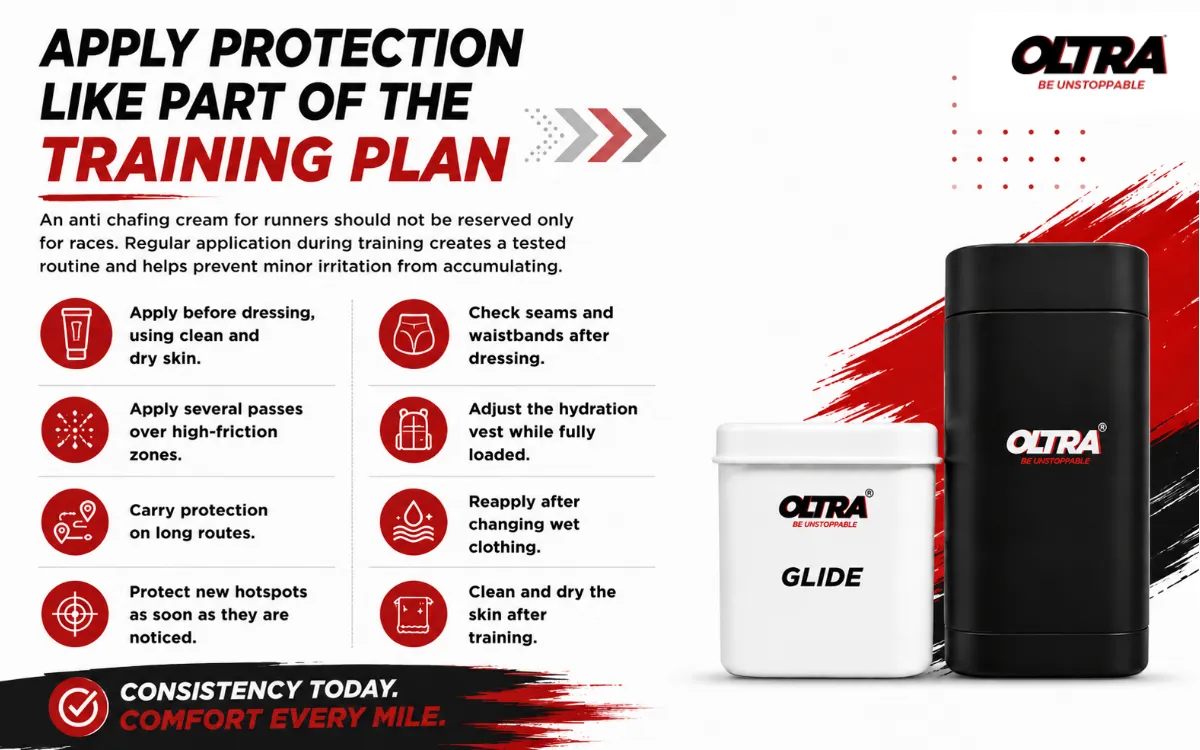
For demanding sessions:
-
Apply several passes over high-friction zones.
-
Check seams and waistbands after dressing.
-
Adjust the hydration vest while fully loaded.
-
Carry protection on long routes.
-
Reapply after changing wet clothing.
-
Protect new hotspots as soon as they are noticed.
-
Clean and dry the skin after training.
Do not use an important race as an experiment. Every part of the routine should already be familiar.
Testing in Different Conditions
A product that feels comfortable in cool weather should also be tested when sweat levels rise.
Try it during:
-
Warm outdoor runs
-
Rainy sessions
-
Indoor treadmill training
-
Long runs
-
Faster workouts
-
Runs with a hydration vest
-
Back-to-back training days
Testing in realistic conditions can reveal whether the product needs heavier application or reapplication.
Clothing Remains Part of the Solution
A high-quality anti-chafe formula cannot compensate for every clothing problem.
Inspect technical kit regularly. Fabric can stretch, seams can become rough and elastic can lose support after repeated washing.
Replace or repair garments when they:
-
Ride up during normal movement
-
Develop rough areas
-
Have damaged seams
-
No longer remain secure
-
Hold excessive moisture
-
Create pressure around the waist or bra line
-
Cause repeated irritation despite skin protection
Hard-working runners often focus on shoe replacement while keeping worn clothing for too long. Skin comfort deserves the same attention.
Race and Travel Convenience
Frequent runners may travel for events and train away from home. Packaging should be secure and easy to include in a race bag.
A practical anti-chafe product can be used:
-
Before leaving a hotel
-
In a race changing area
-
At an aid station
-
During a multi-stage event
-
Before a post-race walk
-
While travelling in warm weather
-
During cross-training activities
A direct-application balm reduces the need to wash product from the hands, which can be useful where facilities are limited.
Why Oltra Glide Suits Active Routines
Oltra Glide is designed for movement and frequent application. Its balm format allows users to glide the product directly over the thighs, underarms, chest, feet, waist, groin, neck or bra line.
The starter pack combines a reusable applicator with one 40g refill. When the balm is finished, the applicator can be retained and fitted with a replacement refill. This system can suit regular runners who use friction protection throughout a training block.
Oltra describes Glide as plant-based certified, vegan, cruelty-free, made in Britain and free from aluminium, parabens and petroleum. Four unisex scent profiles are offered, including the unscented Core option.
Oltra also develops other plant-based performance products as part of its broader focus on active, everyday lifestyles.
Balancing Performance and Skin Awareness
Training hard does not mean ignoring discomfort. A small hotspot can become a more serious interruption when exposed during consecutive sessions.
Check your skin after long or wet workouts. If an area feels tender, modify the clothing or equipment that caused it before the next session.
Do not continue applying an ordinary preventative balm over broken, bleeding or infected-looking skin. Allow the area to recover and seek professional guidance when symptoms are severe or persistent.
Choosing Protection for Frequent Training
The best cream for chafing should provide more than occasional emergency use. It should be easy to apply several times per week, compact enough for races and versatile enough to cover different training hotspots.
Final Thoughts
Runners who train hard already understand the value of consistency. The same principle applies to skin protection.
Do not wait for a long run to reveal a preventable problem. Build anti-chafe application into ordinary training, test it across conditions and review your clothing regularly. Reliable preparation helps keep the focus on performance rather than friction.