


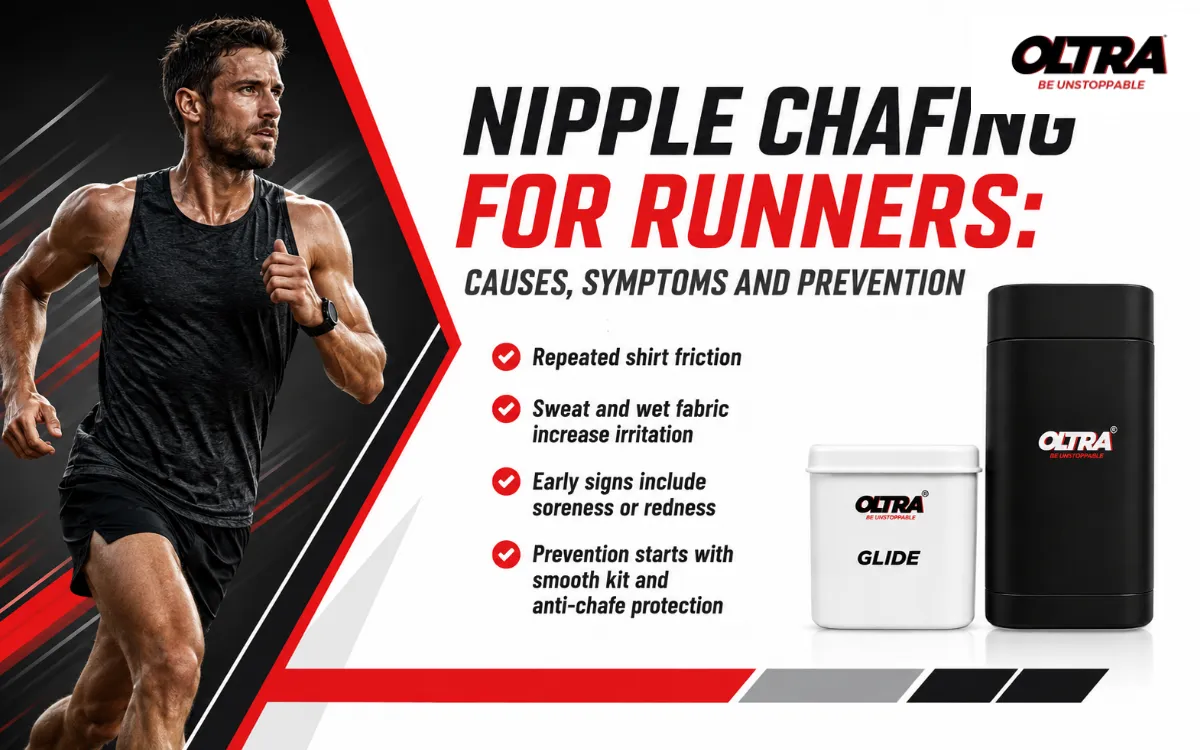
Skin discomfort can quickly interrupt an otherwise productive training session. For endurance athletes, nipple chafing is a particularly sensitive problem caused by repetitive contact between the nipple area and clothing.
It can affect beginners, experienced runners and people of different body types. This educational guide explains how the irritation develops, how to recognise it and what practical steps runners can take to reduce the risk.
What Is Nipple Chafing?
Chafing is surface skin damage caused by repeated friction. On the chest, movement from a running top, sports bra, hydration strap or seam can rub the nipple area with every stride.
Early irritation affects the outer skin layer. Continued friction can cause increasing inflammation, cracking and bleeding. Although the injury is usually minor, the location can make it exceptionally painful.
The informal terms runner’s nipple and jogger’s nipple are often used to describe the same friction-related condition.
The Friction Cycle
Several connected factors create the typical chafing cycle:
-
Fabric repeatedly moves across the skin.
-
Sweat makes the skin and garment wet.
-
Wet skin becomes more vulnerable to damage.
-
Salt and rough fabric increase irritation.
-
The runner changes posture because of discomfort.
-
Altered movement may create more rubbing.
Interrupting this cycle before the skin becomes sore is the central goal of prevention.
Common Symptoms
Symptoms vary depending on the duration and intensity of friction.
Mild symptoms
-
Tingling
-
Localised redness
-
Slight tenderness
-
Dryness
-
Discomfort when the shirt moves
Moderate symptoms
-
Burning
-
Persistent soreness
-
Rough or cracked skin
-
Pain during showering
-
Sensitivity to normal clothing
More serious symptoms
-
Bleeding
-
Open skin
-
Swelling
-
Discharge
-
Increasing warmth
-
Spreading redness
Signs of infection or symptoms that continue despite rest should be assessed by a healthcare professional.
Why Running Creates a Particular Risk
Running produces continuous upper-body movement. Even when the arms and chest appear stable, the garment shifts slightly with every foot strike.
Distance multiplies this contact. A runner taking thousands of steps creates thousands of opportunities for the fabric to drag across sensitive skin.
The problem becomes more likely when the runner is sweating heavily or wearing a wet garment. It can also appear during cool-weather events because the nipple tissue may become firmer and more exposed to contact.
Clothing-Related Causes
Not every running garment offers the same level of protection. Material, construction and fit influence how much rubbing occurs.
Potential clothing triggers include:
-
Absorbent cotton
-
Thick internal seams
-
Raised printed graphics
-
Poorly positioned zips
-
A loose chest fit
-
A bra band that moves
-
Worn or hardened fabric
-
Labels left inside the garment
Technical fabric is often helpful because it moves moisture away from the skin. However, even a moisture-wicking top can cause chafing if its fit or seam placement is unsuitable.
Personal and Environmental Factors
Advice for nipple chafing runners must account for individual differences. Two athletes wearing the same shirt in the same race may have completely different experiences.
Risk can be influenced by:
-
Perspiration level
-
Skin sensitivity
-
Chest shape
-
Body hair
-
Running duration
-
Pace and arm movement
-
Temperature
-
Humidity
-
Rain
-
Hydration equipment
Runners should identify their own pattern instead of assuming the issue has one universal cause.
The Three-Layer Prevention Method
An effective strategy can be built around clothing, skin preparation and monitoring.
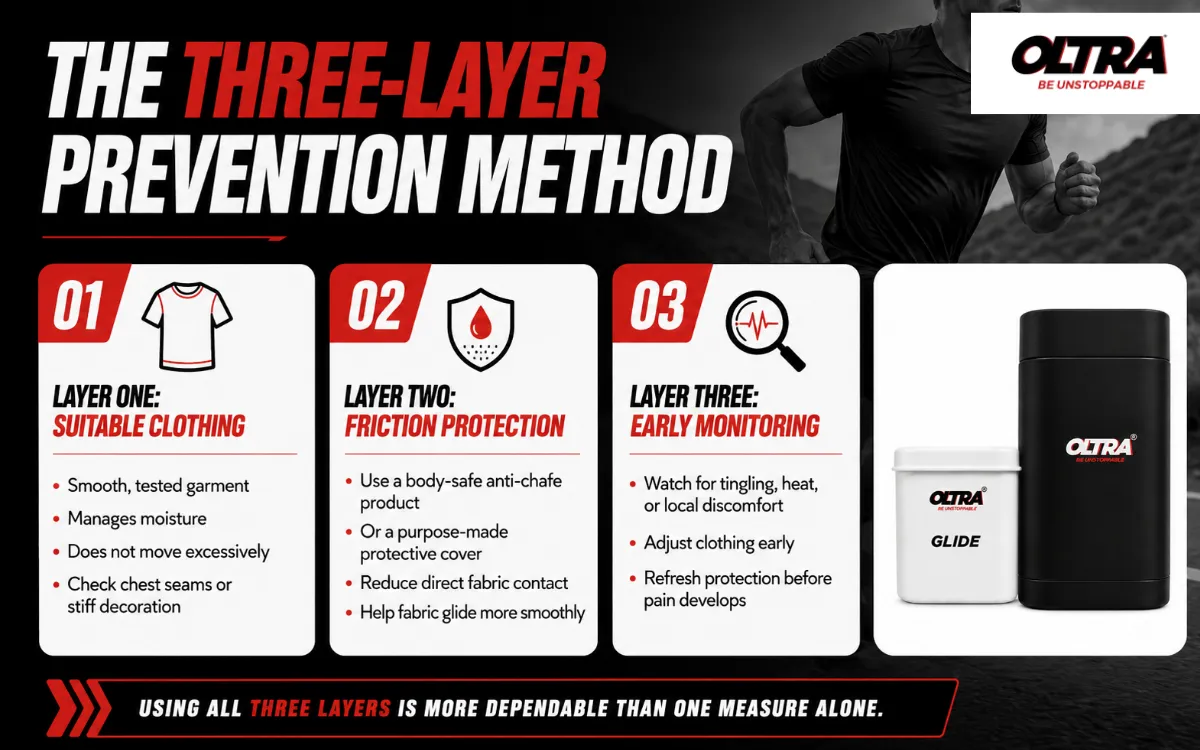
Layer one: Suitable clothing
Wear a smooth, tested garment that manages moisture and does not move excessively. Check the chest area for seams or stiff decoration.
Layer two: Friction protection
Apply a body-safe anti-chafe product or use a purpose-made protective cover. The objective is to reduce direct fabric contact or help the fabric glide more smoothly.
Layer three: Early monitoring
Pay attention to tingling, heat or localised discomfort. Adjust the garment or refresh protection before the sensation becomes painful.
Using all three layers is generally more dependable than relying on one measure alone.
Applying a Balm Correctly
A balm should normally be applied before running, while the skin is clean, intact and dry. Cover the nipple and the surrounding area reached by moving fabric.
Do not wait for the skin to start burning. At that stage, friction has already affected the surface.
During a long event, reapplication can be considered when:
-
The first layer has worn away.
-
The weather is exceptionally hot.
-
Heavy rain has soaked the kit.
-
The runner has changed clothing.
-
Early rubbing becomes noticeable.
Follow the product directions and discontinue use if any ingredient causes irritation.
Common Prevention Mistakes
Runners sometimes repeat avoidable errors:
-
Testing a new shirt during a race
-
Applying protection only after pain begins
-
Covering too small an area
-
Ignoring hydration-vest movement
-
Wearing a cotton top for a long session
-
Using household tape not designed for skin
-
Removing adhesive too aggressively
-
Running again before damaged skin heals
A prevention method should be comfortable both during application and during removal.
Caring for Chafed Skin
Gently clean the affected area to remove sweat, salt and fabric residue. Use lukewarm water and a mild cleanser, then pat the skin dry.
Avoid tight tops while the area is tender. A clean, breathable dressing can protect the skin from accidental rubbing.
Allow enough recovery time for ordinary movement to become comfortable. Consult a healthcare professional if the skin is deeply cracked, continues bleeding, becomes infected or fails to improve. Nipple changes not clearly associated with running should not be self-diagnosed as chafing.
Why Choose Oltra Glide?
Oltra is a modern British wellness brand combining carefully selected natural ingredients with products designed for active routines. Oltra Glide is supplied through a reusable applicator and replaceable 40g refill. Its direct format allows runners to apply the balm without putting product on their hands. The formula is certified plant-based, vegan, cruelty-free, petroleum-free, paraben-free and aluminium-free.
The product is intended for friction-prone areas including the nipples, chest, inner thighs, underarms and feet. For readers asking how to stop nipple chafing while running, the refillable system provides a convenient option for making anti-chafe application part of a repeatable pre-run routine.
Prevention Begins Before the First Step
Runner’s nipple should not be accepted as an unavoidable cost of endurance sport. Most runners can reduce their risk by testing clothing, controlling moisture, creating a protective barrier and responding to early warning signs.
Build these steps into normal preparation rather than saving them for race day. Consistency gives runners the best chance of remaining comfortable from the opening stride to the final kilometre.